
The Islands Between Deadlines
I arrived in Puno, Peru, planning to stay for two weeks.
I had a major book design project due, a difficult client to manage, and Lake Titicaca, the world's highest navigable lake, sitting at roughly 12,500 feet above sea level, right outside my window.
The plan seemed perfect: work during the day, explore between deadlines, and soak in a culture I'd never experienced before.
And for the first several days, it was.
Between work sessions, I explored three incredible islands in Lake Titicaca.
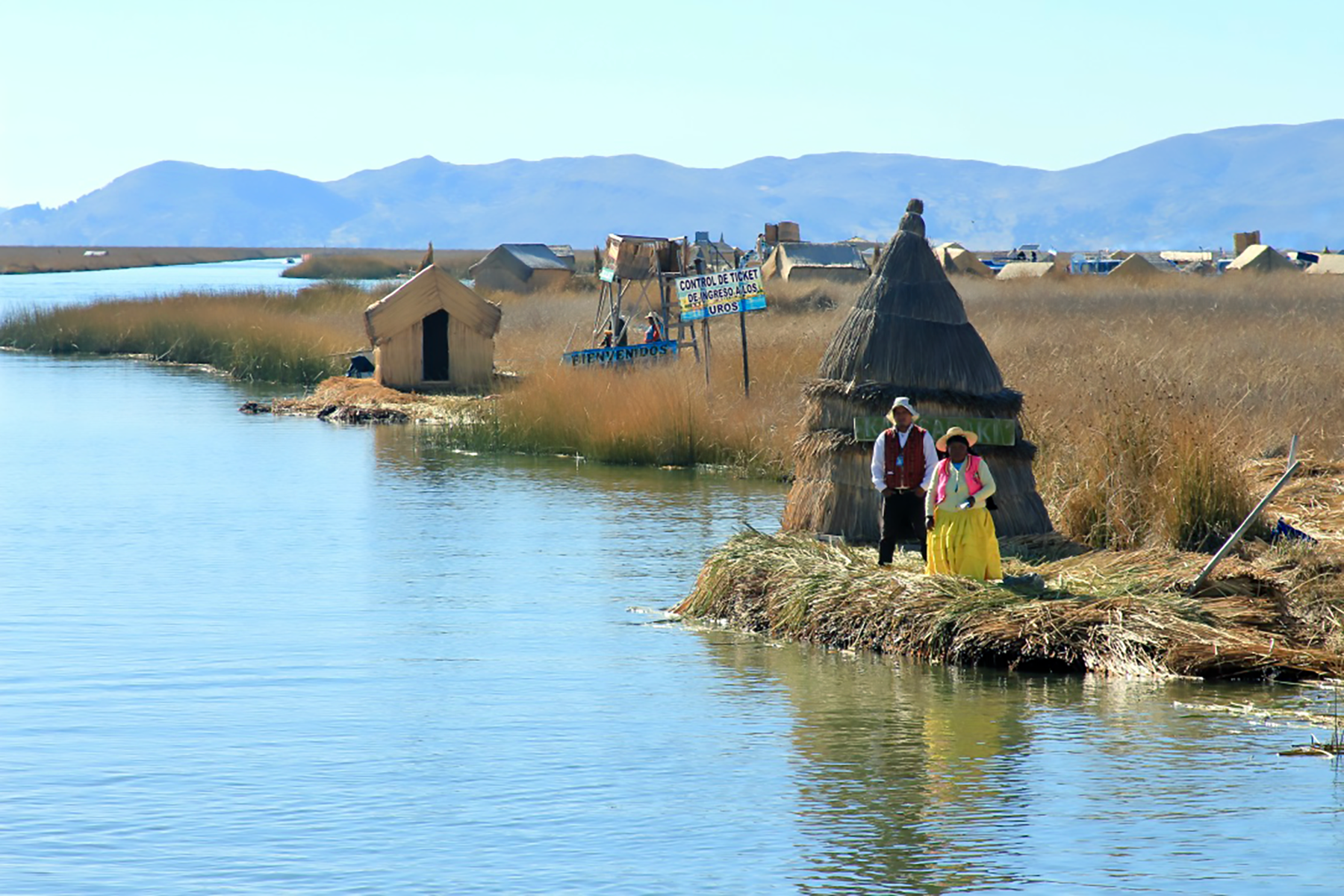
The Uros Floating Islands were my first stop, where entire communities live on platforms built from layers of woven reeds. I traveled by boat through the islands, fascinated by the ingenuity required to create a way of life on something that literally floats.
Then came Taquile Island, known for its textile traditions, steep terraced hillsides, and long history.
But Amantani Island was where the experience became something else entirely.
I stayed overnight with a local family.
No hotel.
No polished tourist infrastructure.
Just their home, their hospitality, and a glimpse into the rhythm of everyday life on the island.
That night, I stood outside under one of the clearest skies I had ever seen.
The Southern Cross and Milky Way stretched above me in a way I had never experienced before.
It was absolutely magical, the kind of moment that reminds you why you wanted this kind of freedom in the first place.
I photographed everything. Took notes. Tried to absorb as much as I could.
Then I returned to my hotel in Puno to finish the book project.
And that's when the adventure became a work problem.
When Everything Falls Apart at 12,500 Feet
The WiFi was unusable.
Not merely slow.
Not occasionally spotty.
Essentially unusable for uploading the large design files my client needed.
My deadline was one week away.
The client was demanding, and I knew that explaining my infrastructure problem wasn't going to help either of us.
She had hired me to deliver excellent work on time.
Where I happened to be working from was my responsibility.
So I didn't tell her.
I solved the problem instead.
The Night Bus to Arequipa
That afternoon, I packed my bags and boarded a bus to Arequipa, about five hours away through the Andes.
I arrived the next morning, found an Airbnb with reliable WiFi, and got back to work.
One week later, I delivered the project on time.
The client was happy.
She never knew I'd changed cities mid-project or that I'd been trying to work at high altitude with an internet connection that couldn't support the job.
The crisis existed.
I dealt with it.
She got what she hired me to deliver.
And that distinction became an important lesson in what location freedom really requires.
The Reward
After the project wrapped, I gave myself permission to breathe.
I traveled to Colca Canyon, one of the deepest canyons in the world and one of the best-known places in Peru for seeing Andean condors.
I spent an afternoon photographing them gliding on thermal currents above the canyon.
One of those photographs later appeared in a travel magazine.
Standing there after successfully navigating a work crisis felt like proof of something I had been learning again and again:
You can have the adventure and still do excellent work.
But the lifestyle works much better when you have systems behind the freedom.
What I Learned
I was able to solve the problem in Puno because I had options.
I had enough money for the bus.
I knew Arequipa had better infrastructure.
I could move quickly.
And I had enough experience traveling to make the pivot without completely falling apart.
But relying on luck is not a remote-work strategy.
- 1I already knew Arequipa was an option. That mattered. When something goes wrong, you don't want your first move to be figuring out where in the country you might be able to work. Before settling into a destination, know where you could go if the WiFi, electricity, accommodation, or other critical infrastructure fails.
- 2A blazing-fast connection that drops every twenty minutes may be less useful than a slower connection that stays stable all day. If your work depends on video calls, large uploads, cloud software, or collaboration tools, test the connection before assuming the listing description is accurate.
- 3Not every beautiful place is a good place to work. And not every workweek is a good time to experiment with a remote island or unreliable infrastructure. If you're heading into an important deadline, major launch, client presentation, or other high-stakes period, choose a location that gives you fewer variables to manage. Save the more adventurous locations for weeks when your work can tolerate more uncertainty.
- 4My emergency bus ticket and last-minute Airbnb weren't part of the original plan. Fortunately, I could absorb the expense. Location freedom is easier when your travel budget includes money for things not going according to plan. A second hotel. A coworking space. An unexpected flight. A new SIM card. A transportation change. Problems become much less dramatic when you've already given yourself financial room to solve them.
- 5This may be one of the biggest mistakes people make when imagining remote work abroad. They ask: Where do I want to go? But for a work trip, there is another question: Can my work function well there? Lake Titicaca was extraordinary. But extraordinary to visit and practical for remote work are two entirely different standards.
Why This Matters for Remote Work Planning
When people think about working from another country, they usually start with questions like:
Where should I go?
What's the cost of living?
Is it safe?
Those are important.
But if your income depends on the work you continue doing while you're away, there is another question that belongs near the top of the list:
Can I reliably deliver my work from this location, even when something goes wrong?
Because eventually, something will.
WiFi fails.
Power goes out.
An Airbnb isn't what the listing promised.
A meeting suddenly matters more than you expected.
Time zones become inconvenient.
You get sick.
Transportation changes.
The difference between a manageable disruption and a disaster usually isn't whether problems happen.
It's whether you've built enough flexibility to respond to them.
You Can Have Both
The floating islands were unforgettable.
The night sky over Amantani was magical.
Colca Canyon was breathtaking.
And the condor photograph became a wonderful souvenir of that chapter of the trip.
But the real lesson wasn't that I managed to work from Peru while seeing beautiful places.
It was this:
Freedom and responsibility don't have to compete with each other.
You can explore the world and still take your work seriously.
You can build a life with more location freedom without becoming unreliable.
And you can have the adventure without leaving everything else to chance.
The goal isn't to hope nothing goes wrong.
It's to build enough capacity, flexibility, and backup options that when something does go wrong, you can handle it.
That's what made that deadline possible.
And it's still one of the most important things I think about whenever I choose where to work from next.